For years, the conversation around food waste has focused on measurement and reduction: how much food is being lost, where it happens and how companies can reduce it within their own operations.
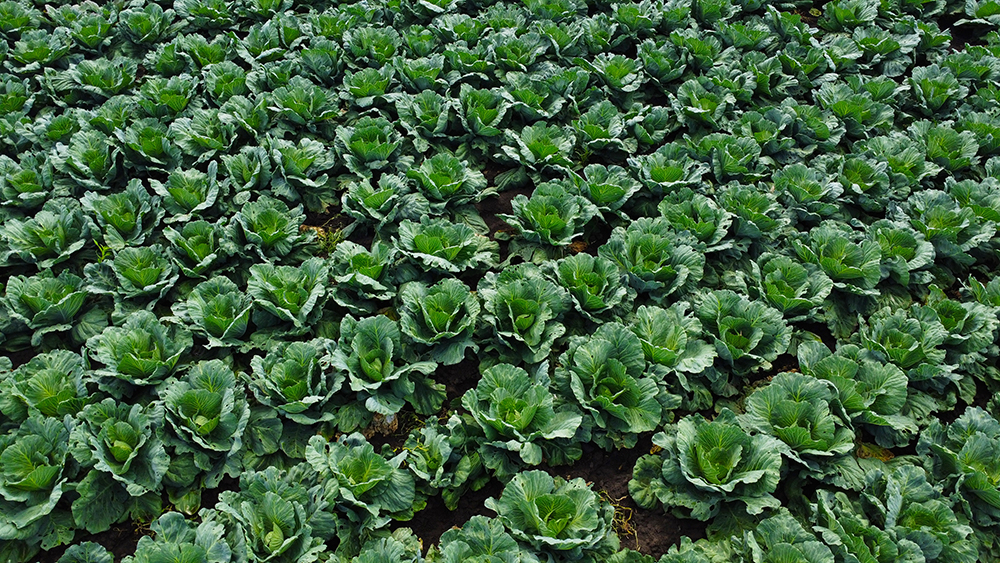
But for retailers and manufacturers, some of the biggest opportunities sit outside their four walls. The World Resources Institute estimates that 83% of wasted calories occur outside owned operations — 48% on farms and 35% in homes.
Yet conventional corporate metrics tend to focus on what happens within a company’s direct operational boundary. That creates a fundamental business challenge. A retailer or manufacturer may be able to reduce food loss on a farm, extend shelf life in a household or increase the marketable crop yield through changes to specifications, but the cost of the intervention may sit with one actor while the benefits accrue elsewhere.
The result is a familiar dilemma: an intervention can make sense for the wider food system, but be difficult to adopt within an individual company.
This is where the conversation needs to shift — from food waste to food value.
Reducing food waste is not only about preventing waste. Every portion of food carries value beyond its price: nutritional value for people, economic value for businesses and farmers, and value embedded in the natural resources required to produce it. When food is lost or wasted, part of that value is lost too.
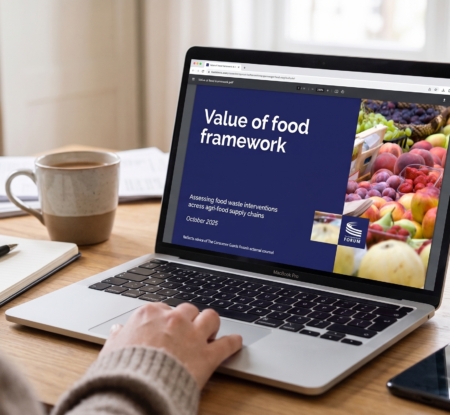
The Consumer Goods Forum’s (CGF) Food Waste Coalition has developed the Value of Food Framework to help companies identify where action across their agri-food chain can create that value for manufacturers and retailers.
From reducing waste to protecting value
The starting point for the Framework is a simple question: where can action create the most business value?
Rather than looking only at where a company has food waste, businesses can use the Framework to consider where interventions across their value chains could protect supply, strengthen resilience, support commercial performance and reduce food loss and waste.
The question is no longer simply how to reduce food waste. It is also where to focus investment. Reducing food waste is about protecting the value of food and everything that goes into producing it.
That broader perspective matters because food waste can represent much more than a sustainability impact. It can mean lost raw materials, avoidable costs, supply-chain vulnerability, exposure to climate and nature risks, regulatory challenges and lost consumer value.
Protecting food value can therefore generate multiple benefits simultaneously, from cost savings and supply security to reduced environmental impacts and stronger consumer trust.
For example, investing in on-farm precooling could help a grower reduce losses while giving a retailer or manufacturer longer shelf life and fewer rejected products. Similarly, widening cosmetic specifications could increase the proportion of a crop that reaches market, creating value for growers while changing a commercial decision for the buyer. Further downstream, clearer storage guidance, improved date labelling, portion formats or shelf-life innovations can help households waste less food, creating value for consumers while strengthening product performance and brand trust.
In these cases, the opportunity exists, but the costs and benefits do not necessarily sit with the same organisation. This misalignment is one of the biggest barriers to action across the food system.
A business challenge that sits across the value chain
When a company funds a food-waste solution outside its direct operations, it may absorb the cost internally while some of the measurable benefits appear elsewhere in the value chain. Traditional accounting can therefore make an intervention that potentially has business value look like an additional expense.
The Value of Food Framework is designed to help individual businesses measure the value of those opportunities.
By providing a decision structure for each company to use, the Framework enables individual companies to examine interventions across their wider agri-food chain, consider the different forms of value they could create and identify where action, investment and decision-making need to sit.
The Framework recommends considering factors including financial benefit, supply-chain resilience, climate and nature risk, regulatory readiness, brand and category trust, food-loss and waste reduction, and feasibility.
The aim is not to reduce every opportunity to a single financial metric. Instead, it is a tool that helps companies build a fuller picture of the value at stake and connect that value to the parts of the business that can act.
From opportunity to action
The starting point does not need to be a strategy for the entire value chain.
A company can begin with a specific product, market or loss point where they already see an opportunity or challenge. Bringing together their commercial, operational and sustainability teams can help establish what intervention could address it, where the costs and benefits would sit and who would need to act.
In some cases, the answer may be an internal business decision. In others, it may be in value chain engagement, co-investment or risk sharing with their supply chain partners.
This is where the Framework can make a difference. The Food Waste Coalition brings together retailers and manufacturers around the ambition of reducing food loss and waste, while the Framework provides an approach for each company to independently identify and evaluate opportunities across their value chain for further attention.
The goal is to move from identifying a food-waste problem to understanding the value at stake, and then to deciding where action can make a difference.
A bigger opportunity for food
For the Food Waste Coalition, the opportunity is bigger than reducing the amount of food that is wasted.
It is about recognising the value that is lost when food is not produced, distributed, sold or consumed as effectively as it could be, and finding ways to protect that value across the chain.
Some of the most important opportunities may sit outside traditional corporate metrics. By bringing those opportunities into view, businesses can begin to build stronger cases for action and identify where value-chain can unlock value.
Ultimately, this is about changing the question from “Where do we have food waste?” to “Where can action across the value chain create the greatest value?”
Food waste is not only a waste problem. It is a value-loss problem. By understanding where value is created, protected and lost across the food system, businesses can identify opportunities that traditional metrics often overlook and unlock benefits for business, people and the planet.
Take the next step
The Value of Food Framework is designed to help businesses turn a broad food waste challenge into a clearer set of opportunities for action.
Whether you are looking to build the business case, identify where value chain engagement could unlock value, or bring sustainability and commercial teams around the same table, the Framework provides a practical starting point.
Download the Value of Food Framework to explore the methodology, assessment tools and action areas in more detail, and learn more about the Food Waste Coalition of Action and its work to accelerate action across the value chain.