CIIE 2026 CGF China
Recently, during the 9th China International Import Expo (CIIE), the Consumer Goods Forum (CGF) China and Bain & Company jointly organised a closed-door seminar in Shanghai entitled “AI scaling innovation:…
CGF collaborates with Bain to explore AI scaling iInnovation

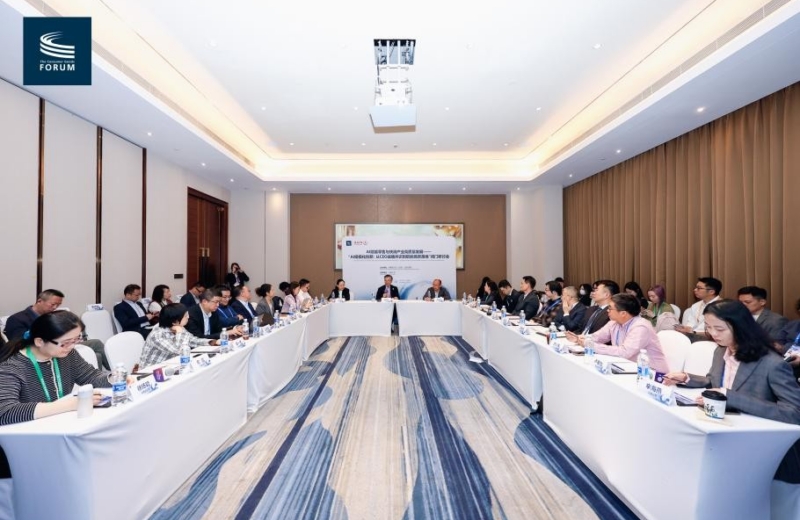
Recently, during the 9th China International Import Expo (CIIE), the Consumer Goods Forum (CGF) China and Bain & Company jointly organised a closed-door seminar in Shanghai entitled “AI scaling innovation: from CEO strategic consensus to functional-level implementation”.
The event brought together more than 40 senior executives from consumer goods, retail, platform and technology companies to discuss the large-scale application of AI in areas such as food safety compliance, business operations, energy conservation and carbon reduction, and research and development.
Officials from relevant departments, including the Shanghai Foreign Investment Association,were also in attendance.
Following the consensus reached at the CGF China CEO closed-door roundtable in September, this seminar focused further on the practical implementation of these functions and frontline execution. Participants agreed that the key to scaling innovation in AI lies not in the number of tools, but in restructuring organisational capabilities to promote efficient collaboration between humans and AI around end-to-end business tasks.
Mr. Pu Shaohua,Chairman of Bailian Group, CGF Board Member and Co-Chair of China Board, delivered a welcome speech. He stated that scaling innovation in AI needs to move beyond high-level consensus and be applied to specific functional scenarios and the front line of business operations. Drawing on the experience of the Bailian Group, he shared four key insights.
Firstly, adopt a problem-oriented approach: identify application scenarios based on genuine operational pain points—such as the customer experience, product management, loyalty marketing, in-store service and fresh produce control—and assess the value of AI through verifiable business outcomes.
Secondly, prioritise the foundational infrastructure: incorporate intelligent upgrades into the Group’s core strategic objectives for the “15th Five-Year Plan”, continuously refine the dual business and data platforms, and standardise core data sets—including product and membership data.
Third, promote human-machine collaboration: drive AI from tool-level efficiency gains towards organisation-wide empowerment; embed capabilities such as intelligent footfall analysis and supply chain quality control into business processes; and encourage staff to return to the essence of service and focus on high-value work.
Fourth, maintain an open and pragmatic approach: deepen strategic cooperation with technology partners; explore cutting-edge areas such as embodied intelligence; advance humanoid robot technology from demonstration to practical application; and build long-term innovation momentum through an open ecosystem.

Chairman of Bailian Group, CGF Global Board Member and Co-Chair of the CGF China Board
Ms. Sophia Xin, partner at Bain & Company and Head of the Applied Technology & AI Practice in Greater China, shared insights on trends in scaling AI innovation, key focus areas and the development of organisational capabilities.
She pointed out that AI is no longer merely a technological bet on the future, but a business reality that is reshaping the competitive landscape. If companies merely deploy generative AI piecemeal within existing workflows, they risk falling into the ‘trap of incremental gains’, making it difficult to sustainably realise productivity gains and business value.
Sophia Xin suggested that enterprises, led by their core management teams, should focus on three to five key areas capable of significantly improving operational performance, rather than spreading their efforts across hundreds of disparate use cases. Areas suitable for scaling implementation typically possess three characteristics: they are closely aligned with the enterprise’s competitive advantages; they possess a wealth of data capable of providing authentic signals to intelligent agents; and they cover end-to-end business processes, rather than being limited to the automation of a single task.
She went on to point out that leading enterprises do not merely use AI to “run faster” in existing markets but are instead building “Proprietary Intelligence” that can continuously accumulate and amplify competitive advantages. Enterprises need to integrate data, workflows and organizational learning capabilities that are difficult for competitors to replicate, ensuring that every AI deployment translates into the next enhancement in capability, thereby creating a flywheel of continuously strengthening competitive advantage.
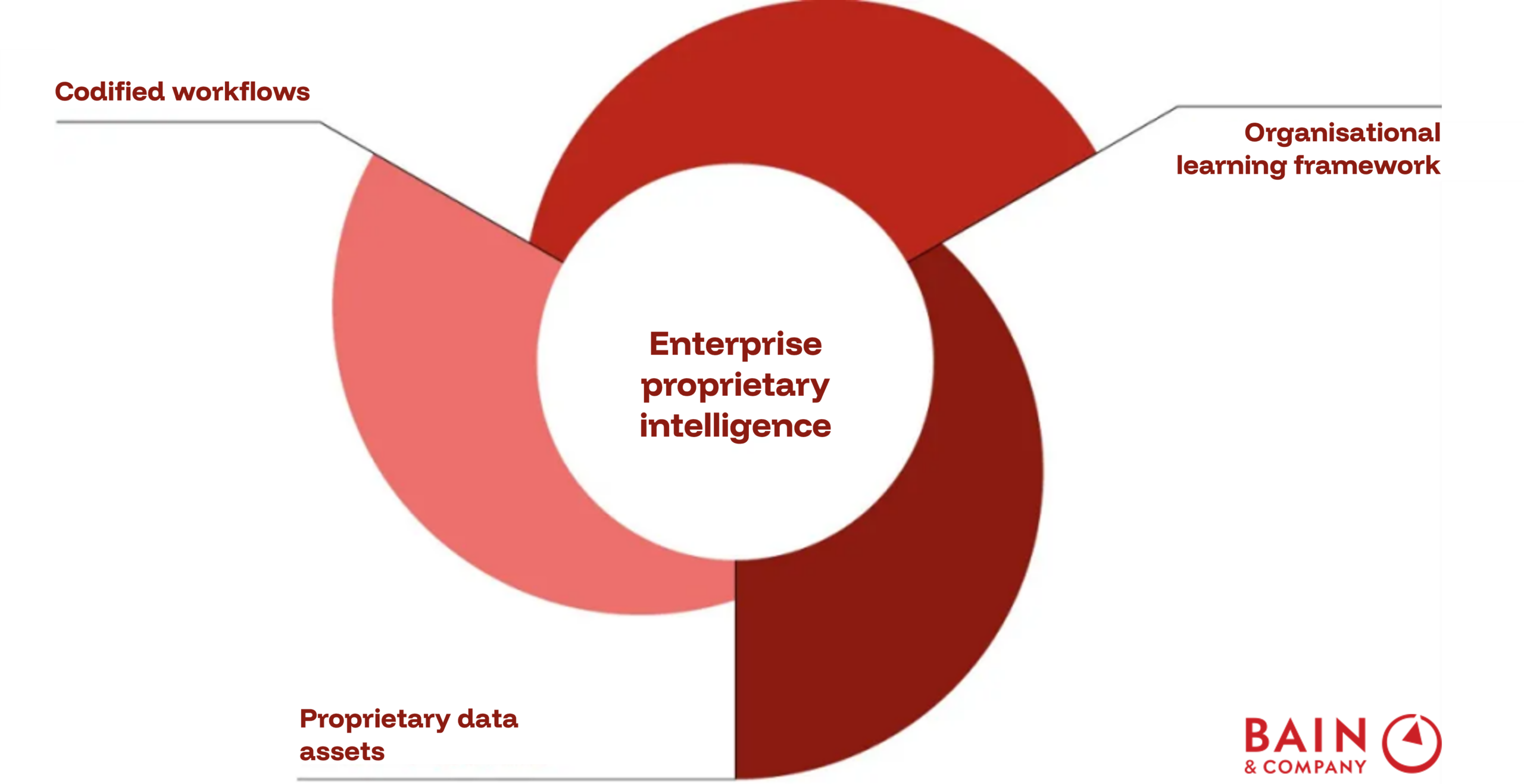
To develop proprietary intelligence, three foundations must be firmly established:
Firstly, proprietary data assets: these include data on customers, operations, transactions, quality and business outcomes accumulated by the enterprise over the long term. This data is not abstract industry information, but rather the unique trajectory and business insights accumulated by the enterprise through its actual operations.
Secondly, codified workflows: transform the judgement criteria, exception handling, approval rules and best practices accumulated through business operations into accessible tools, skills, rules and AI agent workflows, thereby ensuring that organisational knowledge is not confined to the experience of a handful of experts or to process documentation.
Thirdly, the organisational learning framework: establish mechanisms for continuous feedback between humans and AI, and for the ongoing integration of experience into the system, so that every deployment drives system iteration, enabling AI capabilities to be continuously consolidated and transformed into long-term competitive advantages for the enterprise.

Partner at Bain & Company and Head of the Applied Technology & AI Practice in Greater China
During the executive roundtable session, guests from Master Kong Holdings, IKEA China, SUNSEED, Taotian Group, FamilyMart China and LumiWorld shared their practical observations on the current state of AI applications, typical case studies, return on investment, bottlenecks to scaling, and the need for cross-departmental and retailer-supplier collaboration. The discussion covered key scenarios such as food safety and quality compliance, store and supply chain operations, energy consumption optimization and carbon footprint management, as well as new product development and consumer insights.
Mr. Li Jing, Head of Public Relations and Corporate Brand, Master Kong:Against the backdrop of the consumer goods sector entering a phase of rational growth and AI moving from the back office to the front line of business operations, Master Kong positions AI as a commercial tool serving its core business, focusing solely on practical measures to reduce costs, improve efficiency and cut carbon emissions. We encourage staff to use AI to create genuine value, rather than adopting AI for its own sake. Fifty thousand employees use Feishu AI daily, with a daily active user rate of 85%; we utilize AI to integrate the entire supply chain, connecting 1.3 million retail outlets and nearly 30 million consumers through our “Five-Code Integration” system to support inventory forecasting; the use of AI has significantly improved the efficiency of quality control and inspection rounds; and we are advancing sales forecasting, dynamic inventory management and intelligent production scheduling, while building an intelligent middleware platform and a supply chain control tower. AI must help our business see clearly and move swiftly. As a homegrown brand, Master Kong is committed to using AI to deepen and consolidate efficiency, creating long-term value and a positive social impact through high-quality development.
Ms. Liu Rui, Vice President of IKEA China:Centering on the vision of “creating a better everyday life for the many people”, IKEA mainly explores three core dimensions. The first is empowering employees: IKEA equips store and customer service center employees with AI assistants to handle repetitive work, product information queries, inventory queries and common questions, allowing employees to spend their time on face-to-face user service. The second is enhancing user experience: the app has launched AI search, so users can move from “buying a sofa/table” to asking home scenario questions such as living room storage solutions; users upload photos of their homes and the app provides solutions based on space design and product configuration, shortening the path from inspiration and single items to a full solution. The third is from the operations side: using AI to improve the efficiency of sales and stocking forecasts, connecting and consolidating data, incorporating seasonal changes and market trends, predicting which products will sell well and how much stock to allocate to each region and channel, reducing costs and ensuring inventory.
Mr. Mao Liang, Co-founder and CEO of SUNSEED: As consumer demand for food becomes increasingly diverse and personalized, brands and retailers need to respond more swiftly to market changes. However, the food processing industry faces not only challenges such as the high degree of non-standardization in raw materials and complex production processes, but also long-standing issues such as recruitment difficulties and the physically demanding nature of front-line work; traditional automated equipment struggles to balance production efficiency with flexibility; Relying on its proprietary AI models tailored to the food sector, SUNSEED has developed a flexible, general-purpose food processing workstation that enables robots to recognize different ingredients, adapt to varying production processes and switch between production tasks with ease. This flexible production capability not only helps enterprises improve production efficiency, adjust production schedules with agility and accelerate the launch of new products, but also enhances the standardization and quality consistency of food processing, ultimately ensuring that consumers can enjoy healthy, safe and reliable food.
Mr. Xu Jia, Director of Quality Control, Taotian Group stated that the challenges of food safety management lie not only in establishing systems, but also in their implementation and management. Traditional retail quality management suffers from significant pain points, such as the limitations in capability and efficiency of manual compliance audits, inconsistencies in rule enforcement depending on the individual, and delays in identifying issues. Furthermore, the multitude of standards and the complexity of problems make training new staff time-consuming and labor-intensive, while the fragmentation of quality inspection data directly hinders the creation of clear and standardized risk profiles for products and suppliers. AI can deliver three key improvements: by utilizing visual inspection to verify the accuracy of compliance-related details such as appearance, qualifications and labelling; by integrating data from multiple sources to enable early warnings; and by building a compliance knowledge base and establishing clear and precise risk profiles for products and suppliers. In this process, AI does not replace quality control professionals but acts as a collaborative component, reinforcing the standardization of rule enforcement and the richness of data accumulation, ultimately helping professionals to ensure the accuracy of their assessments and the high efficiency of food safety management.
Mr. Yu Cong, Director of the Digital Marketing Department, FamilyMart China: The retail sector caters to the consumption needs of all customer segments across all scenarios. The core value of AI collaboration between retailers and suppliers lies in the product side: by leveraging order-level data insights and genuine consumer feedback, it uses data to gain a clear understanding of consumer behavior and conduct in-depth research to uncover user sentiments. This enables the precise identification of customer segments, channels, purchasing preferences and pain points in the customer experience, thereby empowering new product development and the iteration of best-selling products; The challenge in implementing this lies in establishing a high-quality data foundation across channel platforms and upholding a business philosophy of openness and collaborative innovation. It further requires enterprises to reshape their internal business processes, translating consumer insights into practical operational actions such as audience targeting, product optimization and channel adjustments, thereby moving away from a model of blindly launching new products and stocking shelves, and truly leveraging AI to drive retail growth.
Ms. Zhang Kangrong, Founder and CEO of LumiWorld: For embodied intelligence to truly enter the commercial arena, the current challenge lies primarily in data. LumiWorld has therefore positioned itself as an embodied intelligence AI data and systems company—working upstream to provide leading domestic and international model developers with data acquisition, training and evaluation across diverse scenarios, and downstream to deliver practical system solutions to retailers. Sales assistant and sampling robots are already being piloted at Metro, with cost reduction, efficiency gains, customer conversion and data feedback all being validated simultaneously; related orders will be finalized in due course. Zhang Kangrong believes that the future of retail lies in human-machine collaboration, with stores evolving from labor-intensive organizations into data-driven fulfillment and experience hubs.

Head of Public Relations and Corporate Brand, Master Kong

Vice President of IKEA China

Co-founder and CEO of SUNSEED

Director of Quality Control, Taotian Group

Director of the Digital Marketing Department, FamilyMart China

Founder and CEO of LumiWorld
Mr. Pu Shaohua,Chairman of Bailian Group, CGF Global Board Member and Co-Chair of the CGF China Board concluded that this meeting served to further implement the consensus reached at the CGF China CEO Roundtable in September, bringing AI innovation from high-level strategic consensus down to the front line of business operations. The meeting reached a consensus that AI must be rooted in real-world business operations, avoiding the pursuit of technology for technology’s sake; currently, most industry AI applications remain at the stage of isolated efficiency improvements. Constrained by digital infrastructure, data standards and organizational mechanisms, it is difficult to generate organizational-level business value. Collaboration between brands and retailers, as well as cross-enterprise joint pilot schemes, represent the key breakthroughs for the large-scale implementation of AI.
The case studies, pain points and ideas generated during this seminar will be incorporated into the CGF China CEO Roundtable in Shenzhen next February, to continuously refine industry consensus and implementation pathways, thereby establishing a virtuous cycle where “strategy sets the direction, functions explore the pathways, and the top-level framework is further upgraded”. CGF will continue to expand its focus on local issues, inviting high-caliber enterprises to join in jointly advancing large-scale AI innovation within the consumer goods retail sector and empowering the industry’s high-quality development.
Finally, Ms. Xu Yangying, Chief Representative and General Manager of CGF Greater China said that in the process of scaling up AI, enterprises generally face practical challenges such as the difficulty of translating pilot results into business value, a gap between management expectations and frontline execution, and a lack of clear metrics for assessing the return on technological investment. The participants further reached a consensus: the key to scaling AI innovation lies not in the number of tools, but in restructuring end-to-end workflows around real business problems, strengthening the foundations of data and organization, and accelerating practical validation through collaboration across the industrial chain. Discussions centered on the CGF platform as a catalyst, with plans to promote cross-enterprise joint pilot schemes, document best practices, address gaps in team capabilities, and transform industry consensus into replicable and scalable implementation solutions. She also previewed next year’s CGF global series of events and the annual CGF China Day conference, which, leveraging the open platform of the China International Import Expo (CIIE) and the CGF industry collaboration network, will continue to build a platform for global and local exchange and collaboration, jointly exploring pathways for AI to empower the high-quality development of the consumer industry.

Chief Representative and General Manager of CGF Greater China
About Bain & Company
Bain & Company works with leaders worldwide to solve their toughest challenges and deliver enduring results. Since 1973, we’ve partnered with clients, including private equity and portfolio companies, to build the capabilities they need to stay ahead of change and help them redefine their industries. We measure our success by our clients’ success, and we proudly hold the highest levels of client advocacy in our field.
Bain is consistently recognized globally as one of the best places to work. We operate as one global team, uniting strategists, industry and functional experts, technologists, and advisors with a vibrant ecosystem of technology partners.
Notes to Editors
Bain & Company was founded in 1973 and today has 19,000 employees across 67 cities in 40 countries. We have worked with more than two-thirds of the Global 500 and more than 9,000 companies worldwide. Bain has pledged to deliver $2 billion in pro bono consulting to nonprofit, public-sector and charitable organizations by 2035. The firm is consistently recognized as a Leader in major analyst rankings across multiple areas, including digital business, innovation, strategy, experience design, customer experience, and carbon-zero transformation.
About the Consumer Goods Forum (CGF)
The Consumer Goods Forum (CGF) was founded in Paris, France, in 1953 and is the world’s only CEO-led organization that brings together global consumer goods retailers and manufacturers. With over 400 members, the CGF brings together the world’s leading retailers, manufacturers, service providers and other stakeholders in the consumer goods sector from more than 70 countries. The CGF is governed by a Board of Directors comprising the CEOs of over 57 manufacturers and retailers, whose combined global sales exceed €5.2 trillion. Its mission is ‘Better Business for a Better Life’, helping member companies achieve long-term, sustainable growth while benefiting people and the planet.