By Sharon Bligh, Director of Health & Sustainability, The Consumer Goods Forum, and Clementine O’Connor, Programme Management Officer, Sustainable Food Systems, UNEP
The world wasted an estimated 1.05 billion tonnes of food in 2022 – almost one-fifth (19%) of all food available to consumers. This is on top of an estimated 13% of food being lost earlier in the supply chain, after harvest and before it reaches retail. Together, food loss and waste generate an estimated 8–10% of global greenhouse gas emissions. That means resources are used to grow and transport food that is never eaten.
Food waste is a climate problem we can tackle today. When we prevent food from being wasted, we avoid the emissions and resources associated with producing, transporting and disposing of food that is never eaten. Food businesses have an important role to play because of their influence over how food is produced, marketed and ultimately consumed, or not consumed by people.
Reducing waste requires action throughout the food system. Governments and cities can improve policies and infrastructure. Businesses can change how they measure, handle and sell food. Retailers and manufacturers can also help the people they reach every day waste less at home. That is why the partnership between The Consumer Goods Forum (CGF) and the United Nations Environment Programme (UNEP) matters: it connects a global goal with decisions made across stores, supply chains and households.
The CGF’s Food Waste Coalition of Action brings together retailers and manufacturers committed to reducing food waste across their operations and supply chains, while contributing to the global goal of halving food waste by 2030. Its latest report found a 22% reduction in average food waste intensity, among participating companies since 2021, alongside continuous efforts to strengthen measurement, reporting and governance practices. More companies are developing structured roadmaps to identify where food waste occurs, implement targeted interventions and track progress over time.
The Coalition’s results are encouraging, but they also show why companies need to keep improving their data and, crucially, translate what they learn into targeted action.
Walmart saw an increase in sales of expiring bakery products when it tested clearer displays for them in more than 120 stores. The pilot, supported by UNEP and the Coalition, paired markdown signposting with customer information on food storage, recipes and date labels to help customers use perishable foods effectively.
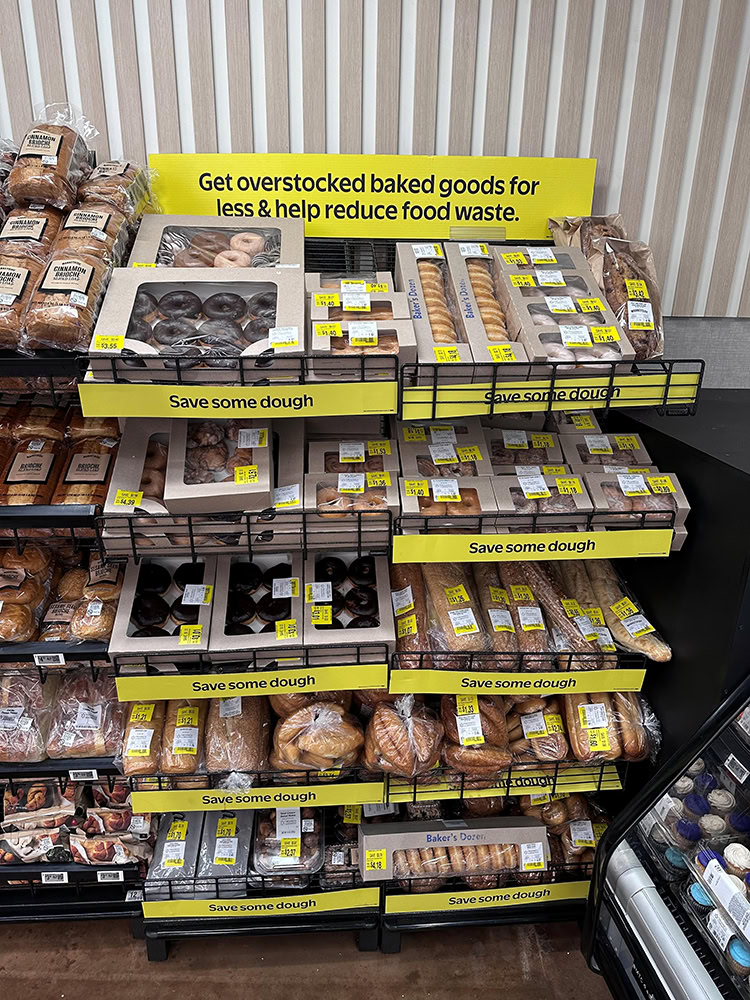
This example offers a practical lesson: retail environments have an impact on how food is purchased – but also how it is used at home. Walmart also shared insights from this work at an event held at United Nations Headquarters in New York to mark the International Day of Zero Waste, highlighting how retailers can help address food waste both through their own operations and by influencing consumer behaviour.
In Türkiye, Migros Ticaret A.Ş. was invited to participate in a multi-partner event convened by UNEP, bringing together stakeholders from government, international organisations, academia and the private sector. The event provided a platform for diverse voices to share knowledge and solutions, highlighting the critical role retailers can play in advancing national conversations on food waste while driving change within their own operations and supply chains.
These examples reinforce an important point: reducing food waste is no longer simply a sustainability ambition. It is increasingly becoming embedded within business strategy, operational decision-making and cross-sector collaboration.
These efforts are part of a wider push. Launched by UNEP and partners at COP30, the Food Waste Breakthrough aims to halve food waste by 2030 and keep food out of landfills reducing methane emissions from waste, a particularly important opportunity as the world looks towards COP31.
Progress is taking shape, but achieving SDG 12.3 will require it to move faster and reach further. Businesses are working to improve their data, prevent waste before it occurs, redistribute safe surplus food and work with suppliers and customers.
Our invitation to retailers and manufacturers is straightforward: measure what is being wasted, act on the findings and help customers use more of the food they buy. By sharing what works, we can turn individual efforts into progress across the food system.